Best AI SEO Checker Tools in 2026: ChatGPT, Claude, Perplexity & AI Mode Compared
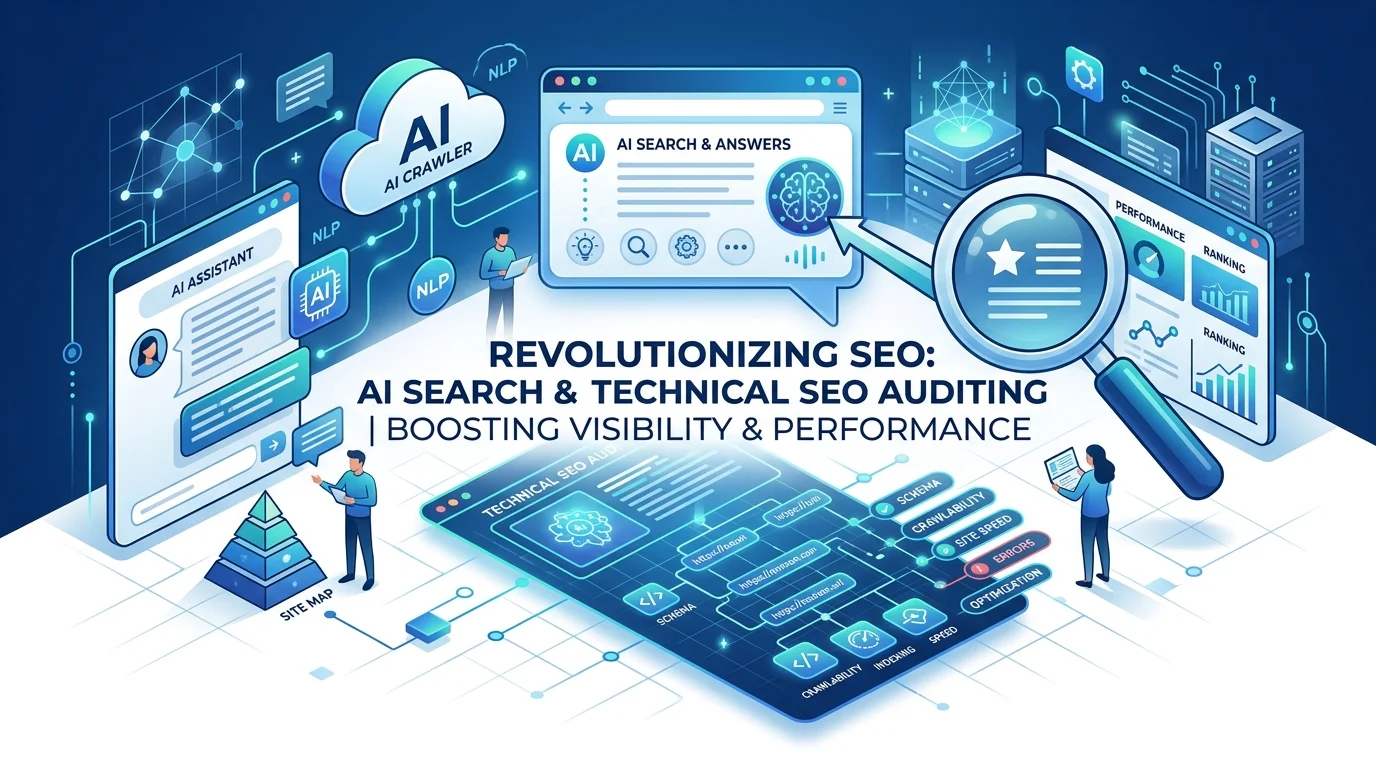
There is no single tool that "audits" whether ChatGPT, Claude, or Perplexity will cite your site the way Google Search Console audits your rankings. What actually works in 2026 is a combination: a solid technical SEO audit that makes your pages easy for any crawler (human search engine or AI model) to read, paired with tools that track how often AI answer engines mention your brand. This guide compares the main categories of AI SEO checker tools on the market, shows you what each one actually measures, and explains why technical SEO is still the foundation everything else sits on.
In this article
- What Is an AI SEO Checker, and Do You Need One?
- How ChatGPT, Claude, Perplexity, and AI Mode Actually Find Your Content
- Best AI SEO Checker Tools Compared
- Why Technical SEO Still Decides Whether AI Engines Cite You
- Free Tools to Audit Your AI Search Readiness
- FAQ
What Is an AI SEO Checker, and Do You Need One?
An AI SEO checker is any tool that helps you understand how AI-powered answer engines, including ChatGPT, Claude, Perplexity, Microsoft Copilot, and Google's AI Mode, discover, interpret, and reference your website. Some tools in this space track brand mentions inside AI-generated answers. Others focus on the technical groundwork: making sure your pages are crawlable, structured, and fast enough to be pulled into an answer in the first place. If your traffic increasingly comes from AI-generated summaries rather than the traditional ten blue links, you need visibility into both sides of that equation.
How ChatGPT, Claude, Perplexity, and AI Mode Actually Find Your Content
Most AI answer engines rely on a mix of their own web crawlers and, in several cases, underlying search indexes similar to the ones traditional search engines use. That means the same fundamentals still apply: your robots.txt file has to allow the relevant crawlers, your sitemap has to be current, your pages need clean HTML structure and schema markup, and your content has to be genuinely useful enough to be worth quoting. Google publishes ongoing guidance on how its crawlers and AI features interact with sites in its Search Central documentation, and it is worth checking periodically since crawler behavior for AI features continues to evolve.
In short, AI engines are not inventing a brand-new discovery process. They are layering an answer-generation step on top of the same crawlability and content-quality signals that have driven organic SEO for years.
Best AI SEO Checker Tools Compared in 2026
Rather than ranking individual products by name (many of the newer AI-citation trackers change their feature sets quickly), it is more useful to compare tool categories so you know what you are actually buying.
| Tool Category | What It Measures | Best For |
|---|---|---|
| AI Citation Trackers | How often ChatGPT, Claude, or Perplexity mention your brand in answers | Brand monitoring, competitive tracking |
| Technical SEO Audit Platforms (e.g. SeeSpect) | Crawlability, schema, metadata, accessibility, security, page structure | Making sure your site can be crawled and understood at all |
| All-in-One SEO Suites | Rankings, backlinks, keyword research, plus emerging AI-visibility modules | Teams that want one dashboard for everything |
| Free Single-Purpose Checkers | One specific factor, like schema markup or title tags | Quick spot checks without a subscription |
If your site has technical gaps, no citation tracker will fix the underlying problem. That is where a technical audit tool like SeeSpect fits into the stack: it scans your pages for the SEO, performance, security, and accessibility issues that determine whether any crawler, human or AI, can actually read and trust your content.

Scans every page for SEO issues, performance problems, security vulnerabilities, and accessibility failures, the foundation AI engines need before they will cite you.
Why Technical SEO Still Decides Whether AI Engines Cite You
AI answer engines cannot cite what they cannot parse. A page with broken canonical tags, missing schema, or a blocked robots.txt entry is invisible to an AI crawler regardless of how good the writing is. The table below breaks down the technical factors that most directly affect whether your content is even eligible to be pulled into an AI-generated answer.
| Factor | Why It Matters for AI Visibility |
|---|---|
| Schema markup | Helps AI models understand entities, relationships, and page intent without guesswork |
| Robots.txt and crawl access | If a crawler is blocked, your content is never in the running to be cited |
| Clean canonical tags | Prevents duplicate or conflicting versions of a page from diluting authority |
| Accessibility and page structure | Clear headings and semantic HTML make content easier for models to extract accurately |

Free Tools to Audit Your AI Search Readiness
Before paying for a full AI citation tracker, it is worth running your site through a set of free checkers to close the obvious technical gaps first. SeeSpect offers several standalone free tools you can use without an account:
- Title Checker
- Meta Description Checker
- H1 Checker
- Schema Checker
- Canonical Checker
- Sitemap Checker
- Robots.txt Checker
- Image Alt Text Checker
- Accessibility Checker
Running your homepage and top landing pages through this checklist takes about ten minutes and will surface most of the issues that keep both traditional search engines and AI crawlers from fully understanding your site. If you want a broader comparison of full audit platforms first, see our roundup of the best SEO audit tools in 2026.

Nine standalone tools covering titles, meta tags, schema, sitemaps, robots.txt, alt text, and accessibility, all free to run.
Final Verdict
Who should use this approach?
Anyone whose traffic is starting to shift toward AI-generated answers, which by 2026 is most sites, should treat AI SEO as an extension of technical SEO rather than a separate discipline. Start with a full technical audit to fix crawlability and structure issues, then layer on a citation tracker if brand monitoring across AI engines becomes a priority. SeeSpect is a strong fit for the first step: it is not an AI-citation tracker, but it covers the technical foundation that determines whether AI engines can read your site in the first place.
Overall Rating: 4.5 / 5
Frequently Asked Questions
Is there a tool that checks ChatGPT SEO specifically?
Several newer tools track how often ChatGPT and other AI engines mention a brand in their answers, but there is no equivalent to Google Search Console for ChatGPT. The most reliable approach is combining a technical SEO audit with periodic manual checks of how your brand shows up in AI-generated answers for your target queries.
What is an LLM SEO checker?
An LLM SEO checker generally refers to a tool that monitors whether large language models like ChatGPT, Claude, or Copilot reference your content when answering relevant questions. Some also flag technical issues that would prevent an LLM's crawler from accessing your pages.
Does Google's AI Mode use traditional SEO signals?
Yes. AI Mode builds on Google's existing search index and ranking signals, so standard technical SEO factors like crawlability, page speed, structured data, and content quality still apply directly.
Are Claude, Perplexity, and Copilot SEO checkers free?
Most standalone AI-citation trackers require a paid subscription once you go past a limited free trial. Technical SEO checkers, including SeeSpect's individual tools for titles, meta tags, schema, and accessibility, are free to use on their own.
How is AI SEO different from traditional SEO?
AI SEO adds a layer on top of traditional SEO: instead of optimizing purely for ranking position, you are also optimizing for the chance of being summarized or quoted inside an AI-generated answer. The technical requirements, crawlability, structured data, clear content, remain largely the same.
Start With a Full Technical SEO Audit
Before you invest in AI citation tracking, make sure your site can actually be crawled and understood. Run a free scan with SeeSpect.
Get Access Now →No credit card required to start.